Field Notes

The technique cards.

Short, useful kitchen rules, one card each. Save them now. You’ll need them later.

Field Note 001, Salt early, not late.

Field Note 001

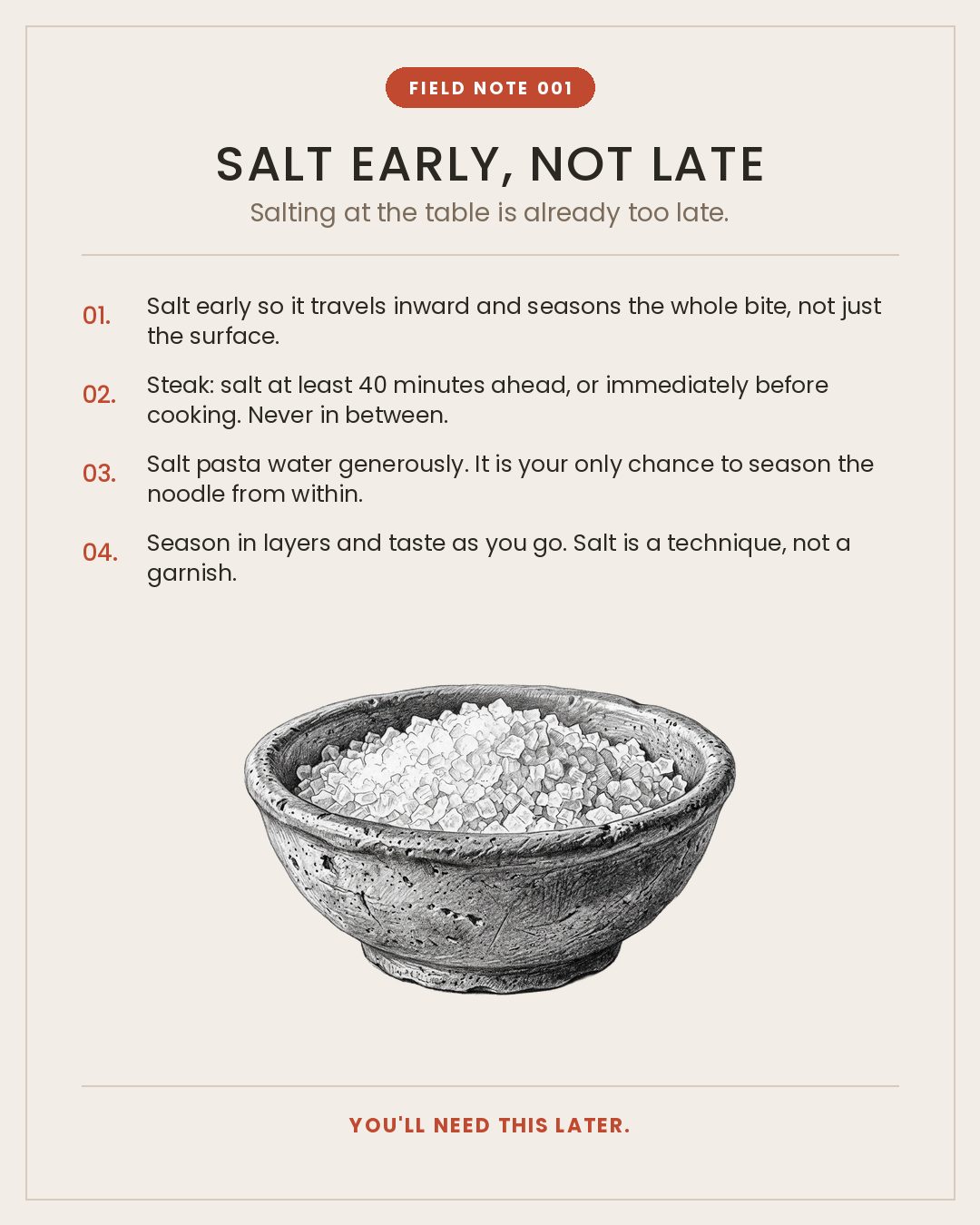
Salt early, not late.

Salt is not a finishing move, it is a technique. Here is how to actually use it.

  1. Salt early so it travels inward and seasons the whole bite, not just the surface.
  2. Steak: salt at least 40 minutes ahead, or immediately before cooking. Never in between.
  3. Salt pasta water generously. It is your only chance to season the noodle from within.
  4. Season in layers and taste as you go. Salt is a technique, not a garnish.

You'll need this later.
Field Note 002, Ten cuts., slide 1Field Note 002, Ten cuts., slide 2Field Note 002, Ten cuts., slide 3Field Note 002, Ten cuts., slide 4

Field Note 002

Ten cuts.

They are not ten things to memorize. They are one ladder.

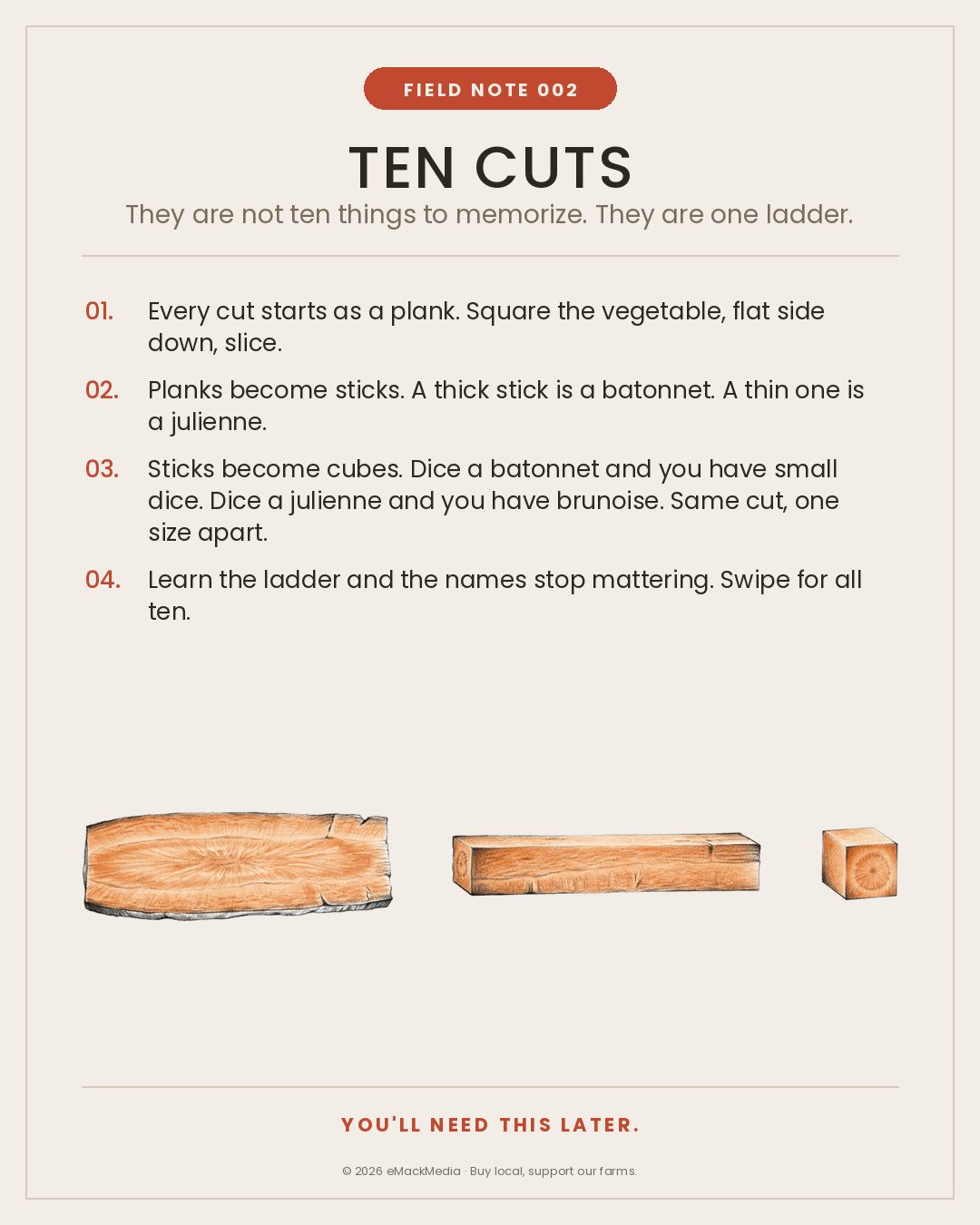
  1. Every cut starts as a plank. Square the vegetable, put a flat side down, slice.
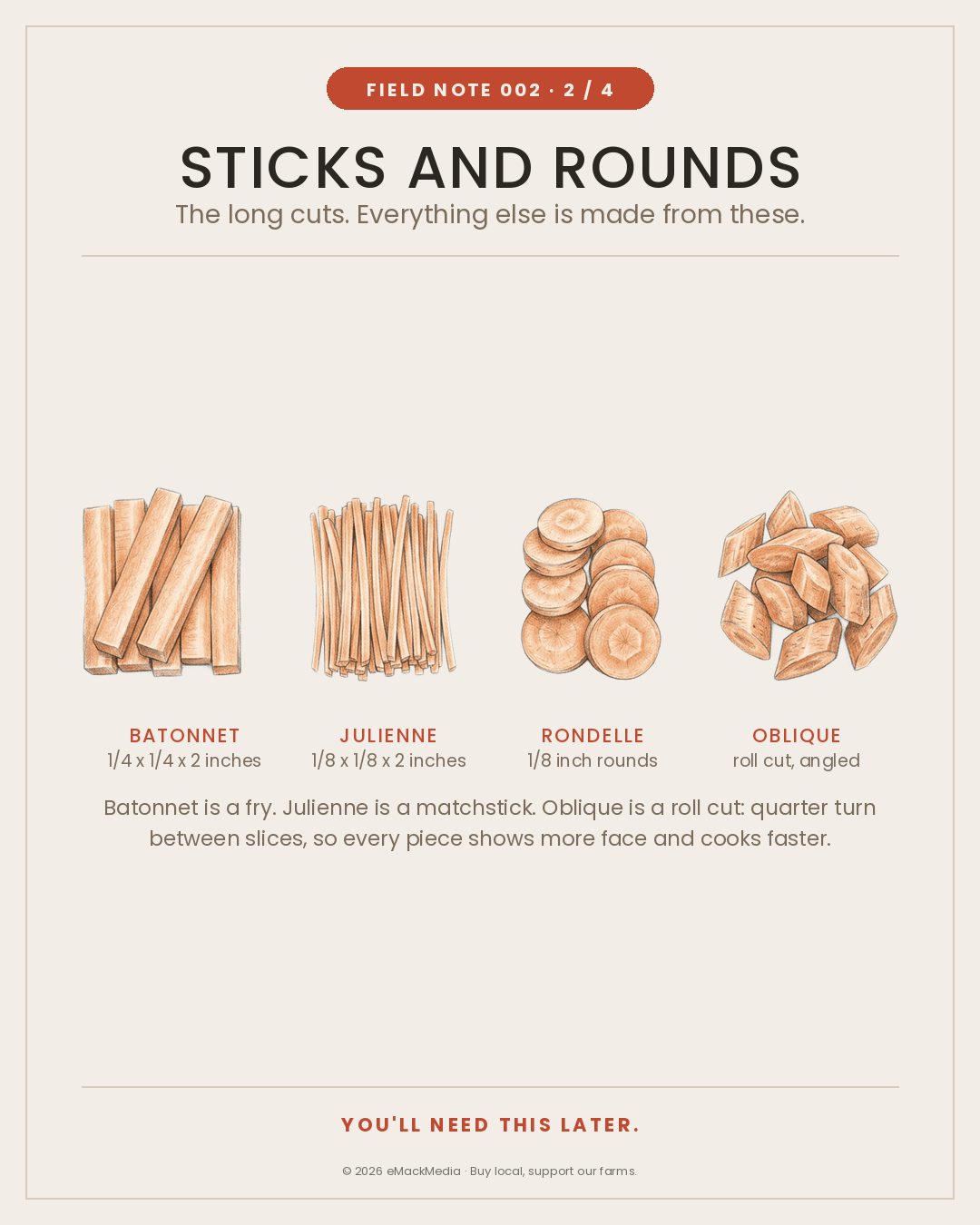
  2. Planks become sticks. A thick stick is a batonnet. A thin one is a julienne.
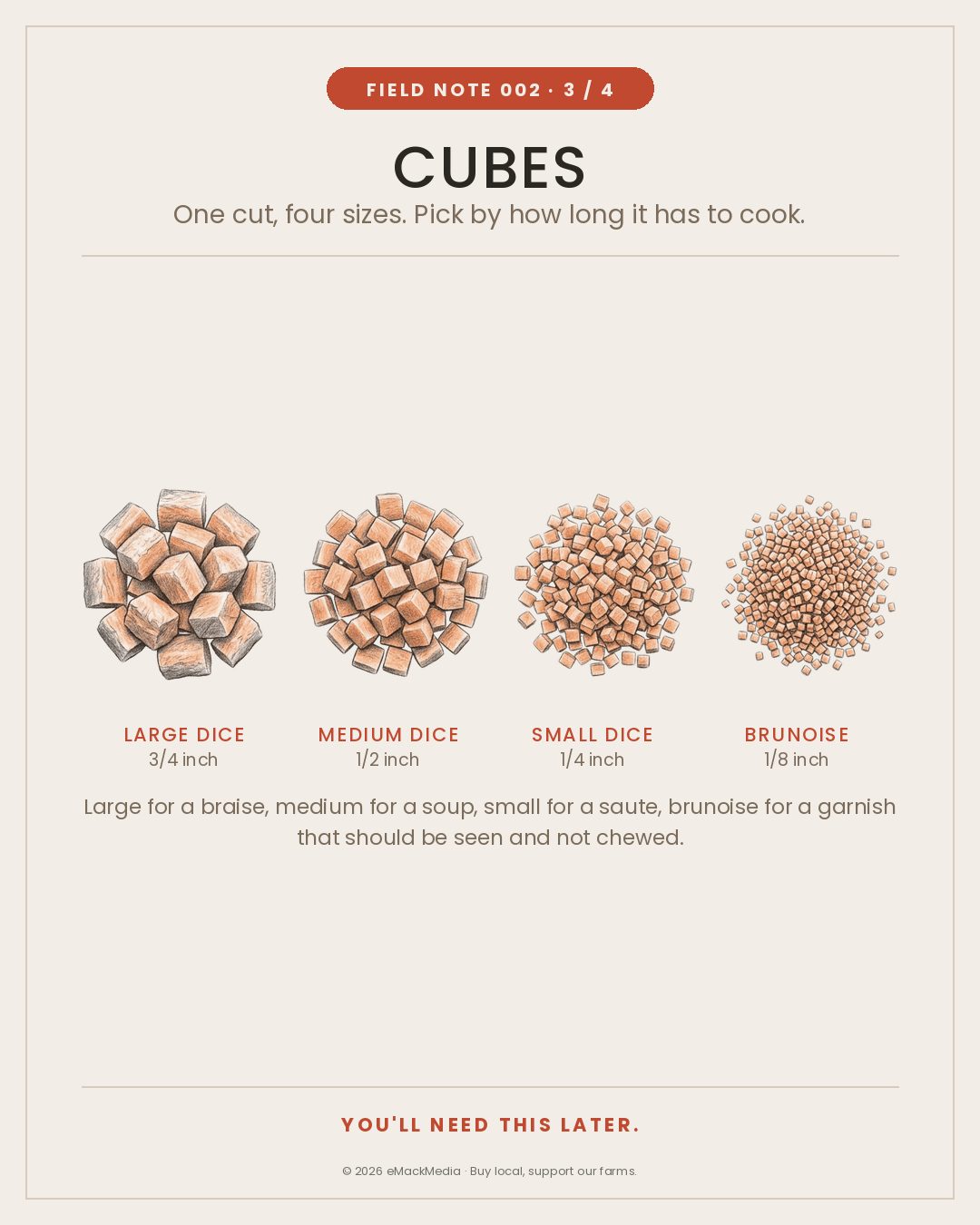
  3. Sticks become cubes. Dice a batonnet and you have small dice. Dice a julienne and you have brunoise. Same cut, one size apart.
  4. Learn the ladder and the names stop mattering.

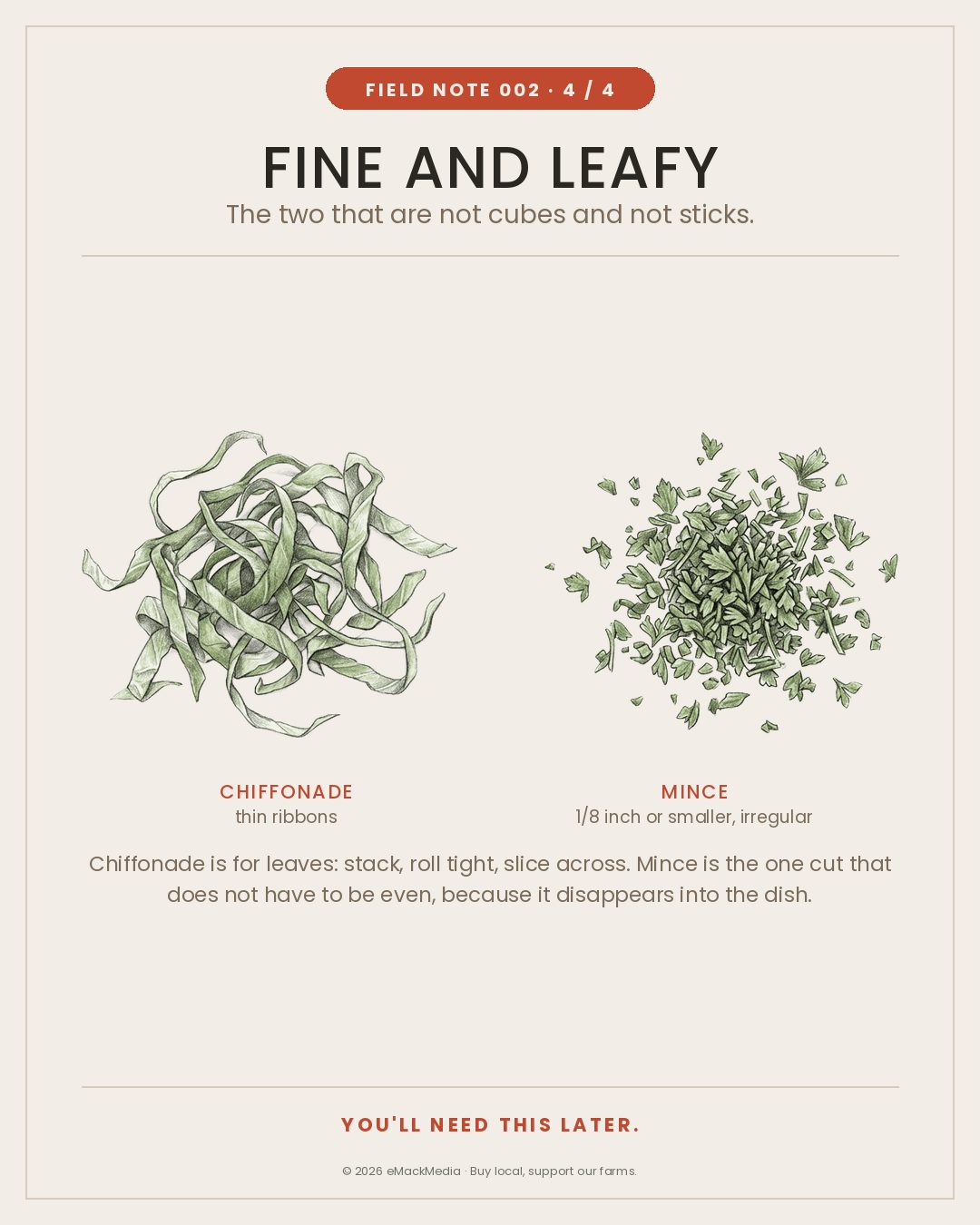
Swipe for all ten, with the sizes: batonnet, julienne, rondelle, oblique, large dice, medium dice, small dice, brunoise, chiffonade, mince.

Save this one. You'll need this later.
Field Note 006, Mushrooms deserve better.

Field Note 006

Mushrooms deserve better.

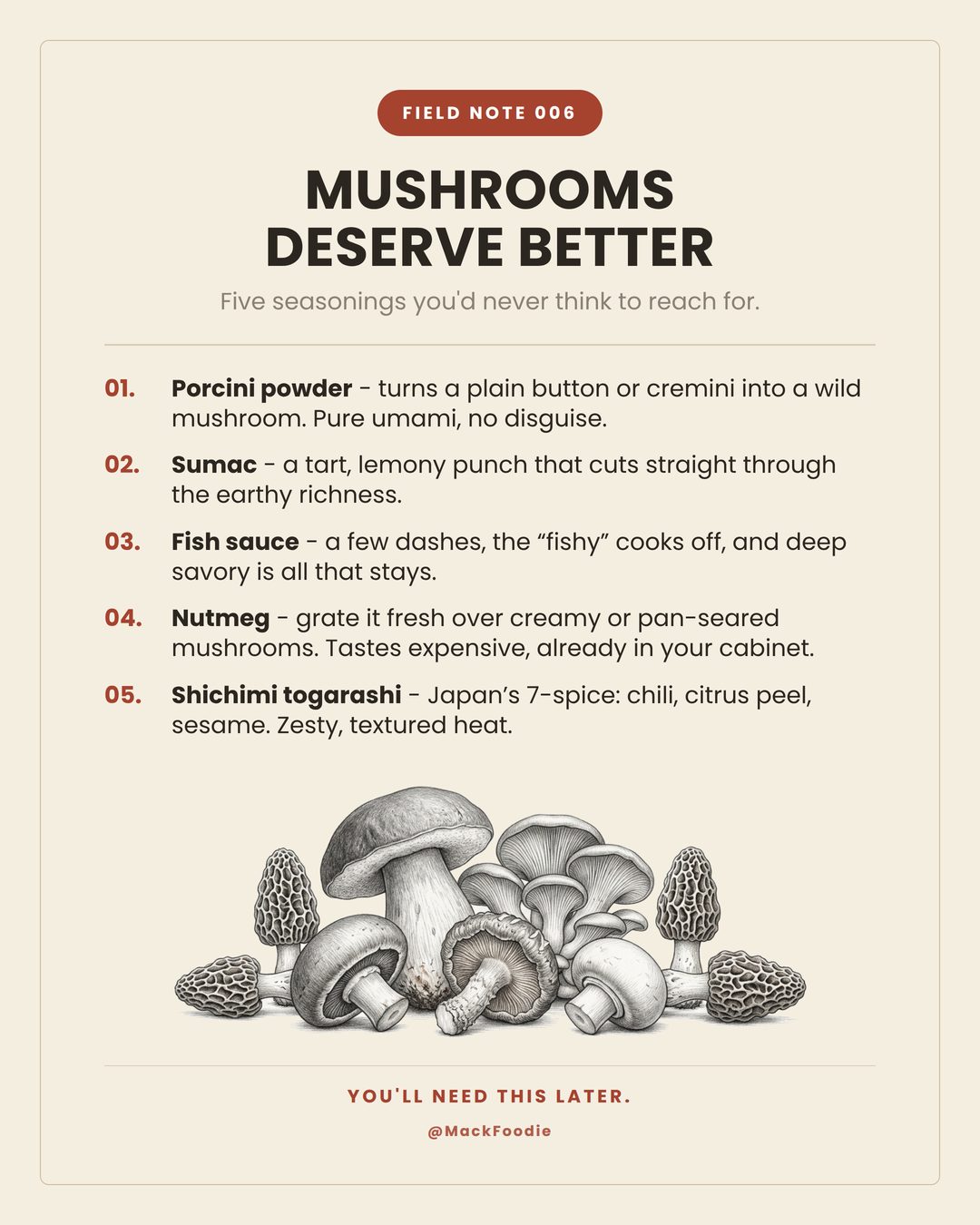
Your mushrooms are bored. Salt and thyme are fine, but here are 5 seasonings almost nobody reaches for, and every one makes fungi taste like a restaurant did it:

  1. Porcini powder: turns a plain cremini into a wild mushroom. Pure umami.
  2. Sumac: tart, lemony punch that cuts the earthy richness.
  3. Fish sauce: a few dashes, the "fishy" cooks off, deep savory stays.
  4. Nutmeg: grate it fresh over creamy or pan-seared 'shrooms. Tastes expensive, and it's already in your cabinet.
  5. Shichimi togarashi: chili, citrus peel, sesame. Zesty, textured heat.

Save this for your next mushroom night.

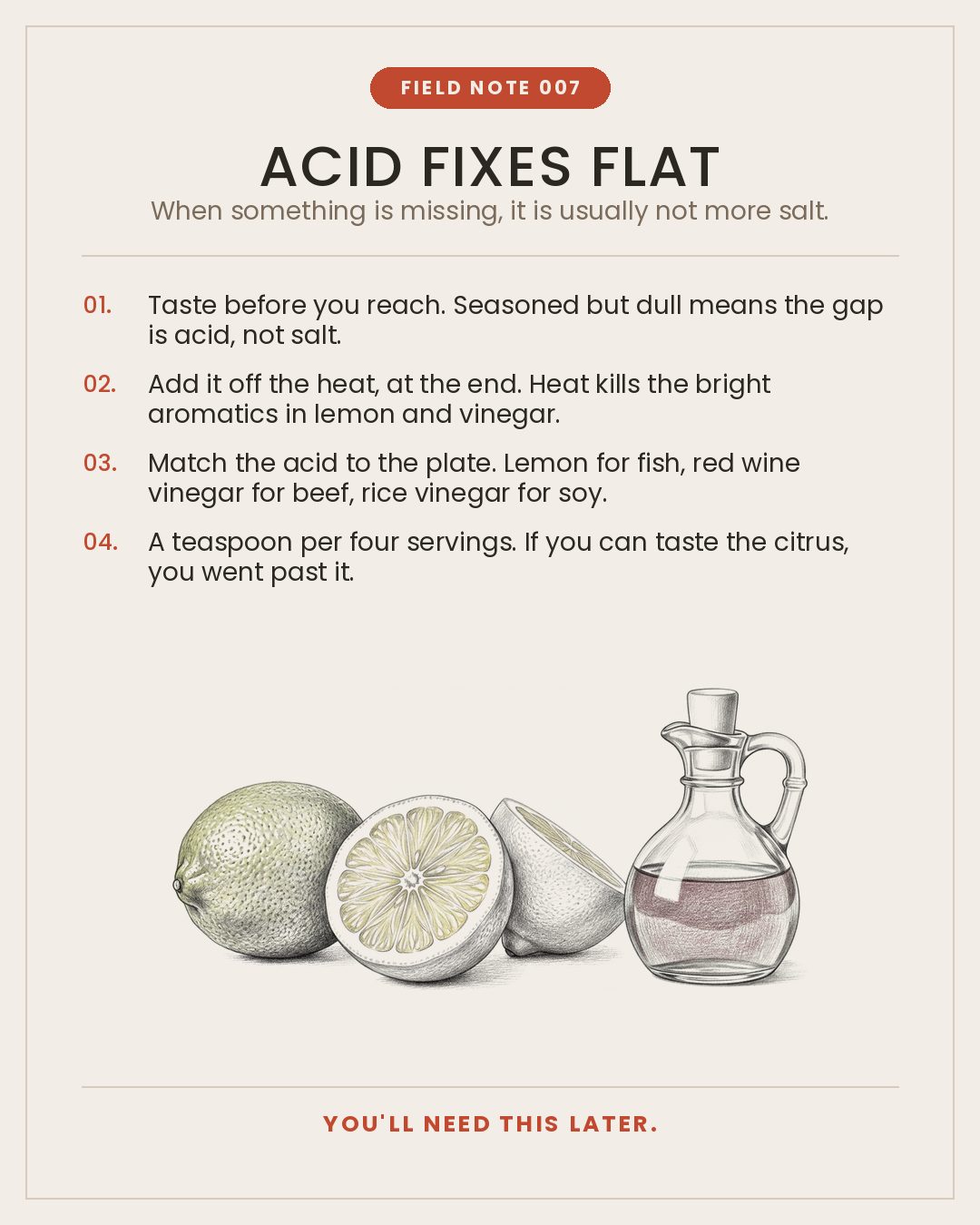
Field Note 007, Acid fixes flat.

Field Note 007

Acid fixes flat.

When a dish tastes like it is missing something, it is almost never more salt. Here is how to actually use acid.

  1. Taste before you reach. If the food is properly seasoned but still dull, the gap is acid, not salt. More salt just makes it salty and dull.
  2. Add it off the heat, at the end. Heat drives off the bright aromatics in lemon and vinegar, so a squeeze at the start is a squeeze wasted.
  3. Match the acid to the plate. Lemon for fish and greens, red wine vinegar for beef and beans, rice vinegar for anything with soy, a splash of the pickle jar for anything rich and fried.
  4. Start with a teaspoon per four servings. The dish should taste like itself, only louder. If you can taste the citrus, you went past it.

You'll need this later.
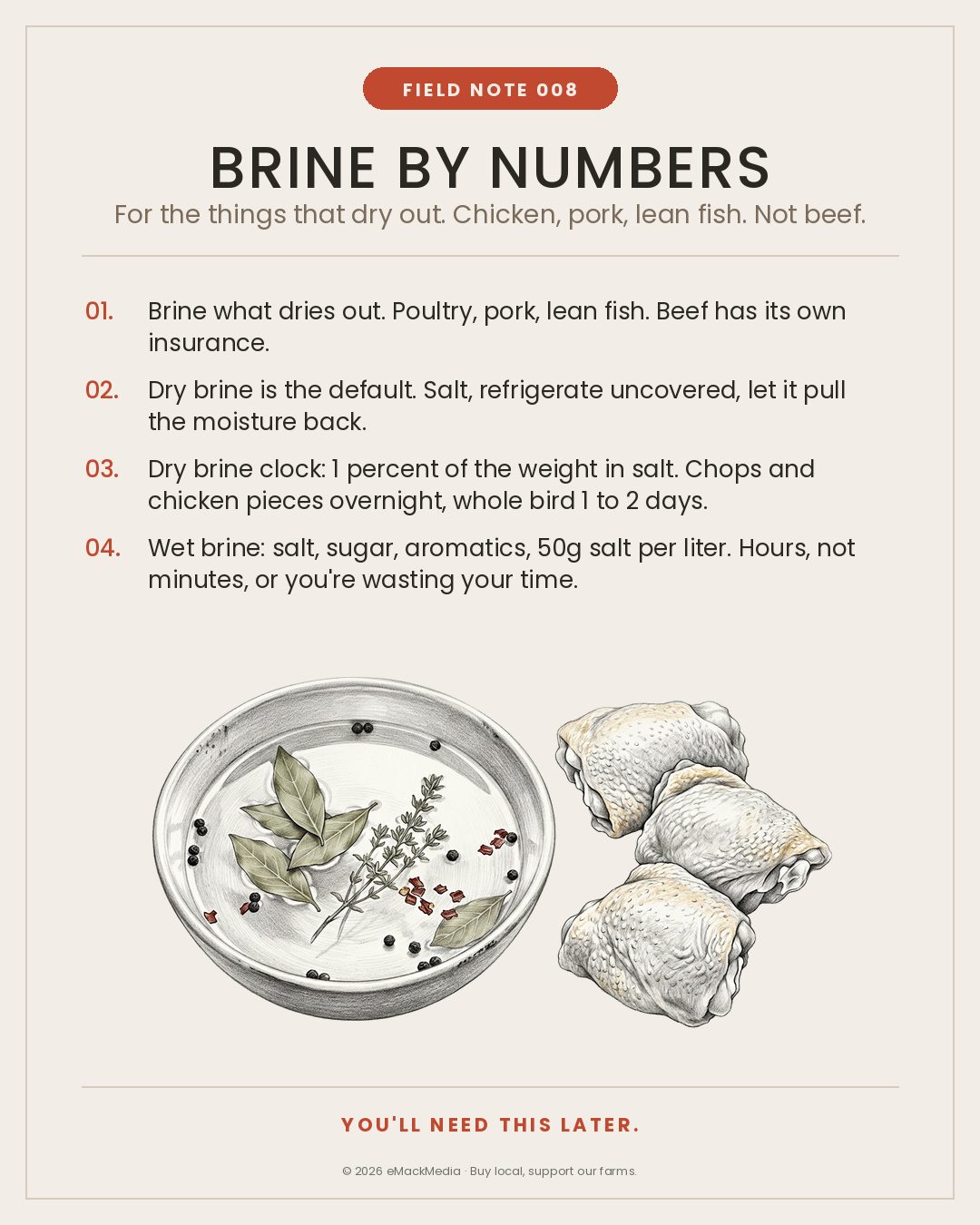
Field Note 008, Brine by numbers.

Field Note 008

Brine by numbers.

Note 001 told you when to salt. This one is for the things that actually need brining: chicken, pork, and lean fish.

  1. Brine what dries out. Poultry, pork, and lean fish have no fat to protect them, so they go from done to ruined in about a minute. Beef does not belong here. A steak has its own insurance.
  2. Dry brine is still the default. Salt the surface, refrigerate uncovered, let the meat pull its own moisture back in. Better skin, better browning, no bucket in the fridge.
  3. The dry brine clock. Salt at 1 percent of the meat's weight, and weigh it, salt brands vary wildly by volume. Chops and chicken pieces go overnight. A whole bird gets one to two days.
  4. Wet brine. Salt, a little sugar and aromatics, about 50 grams of salt per liter of water. Give it hours, not minutes: chops 4 to 6 hours, a whole bird overnight. A quick dunk is wasted effort, and much longer than that turns the texture to ham.

You'll need this later.
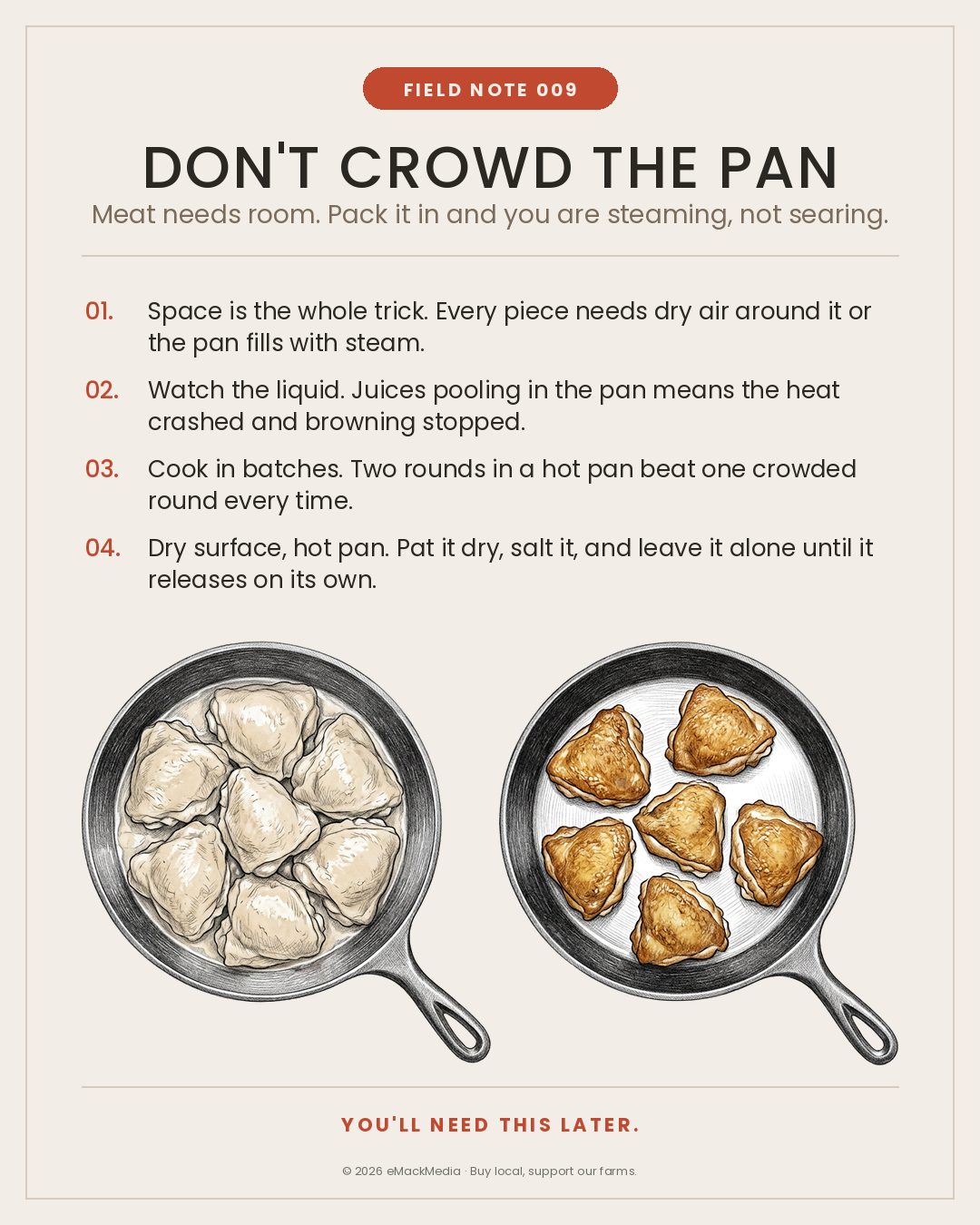
Field Note 009, Don't crowd the pan.

Field Note 009

Don't crowd the pan.

The single most common reason home-cooked meat comes out grey. It is not your stove and it is not your pan.

  1. Space is the whole trick. Meat gives off water as it heats. If there is room around each piece, that water evaporates and the surface browns. If there is not, it pools, the pan drops to the boiling point of water, and you are steaming.
  2. Watch the liquid, not the clock. The moment juices start collecting in the pan, browning has stopped. Nothing you do after that puts the crust back.
  3. Cook in batches. Two rounds in a properly hot pan take less total time than one crowded round, because a crowded pan has to boil all that liquid off before it can do anything else.
  4. Dry surface, hot pan, hands off. Pat the meat dry, salt it, get the pan properly hot, lay it down away from you and leave it. It releases on its own once the crust forms. If it sticks, it is not ready.

You'll need this later.
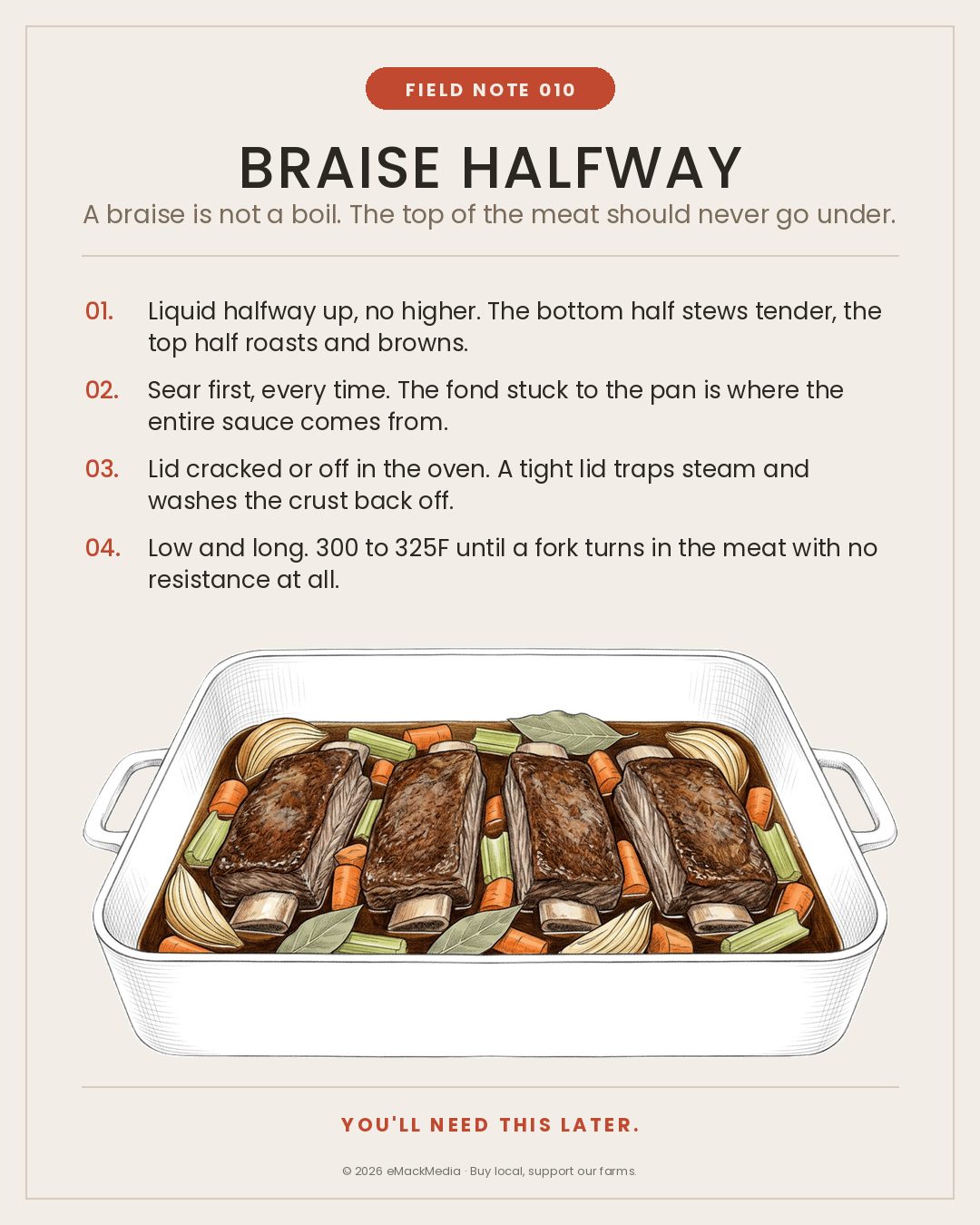
Field Note 010, Braise halfway.

Field Note 010

Braise halfway.

A braise is not a stew and it is not a boil. Half the meat should sit above the liquid the entire time.

  1. Liquid halfway up, no higher. The submerged half goes tender in moist heat. The exposed half roasts and keeps the crust you worked for. Cover it completely and you have made soup.
  2. Sear first, every time. The browned fond stuck to the bottom of the pan is where the entire sauce comes from. Skip it and no amount of oven time puts that flavor back.
  3. Lid cracked, or off entirely. A tight lid traps steam, and that steam condenses and rains back down on the meat, washing the crust off. In the oven you rarely need a lid at all.
  4. Low and long. 300 to 325F. It is done when a fork turns in the meat with no resistance, and not a minute before. Time is a guess. The fork is the test.

You'll need this later.

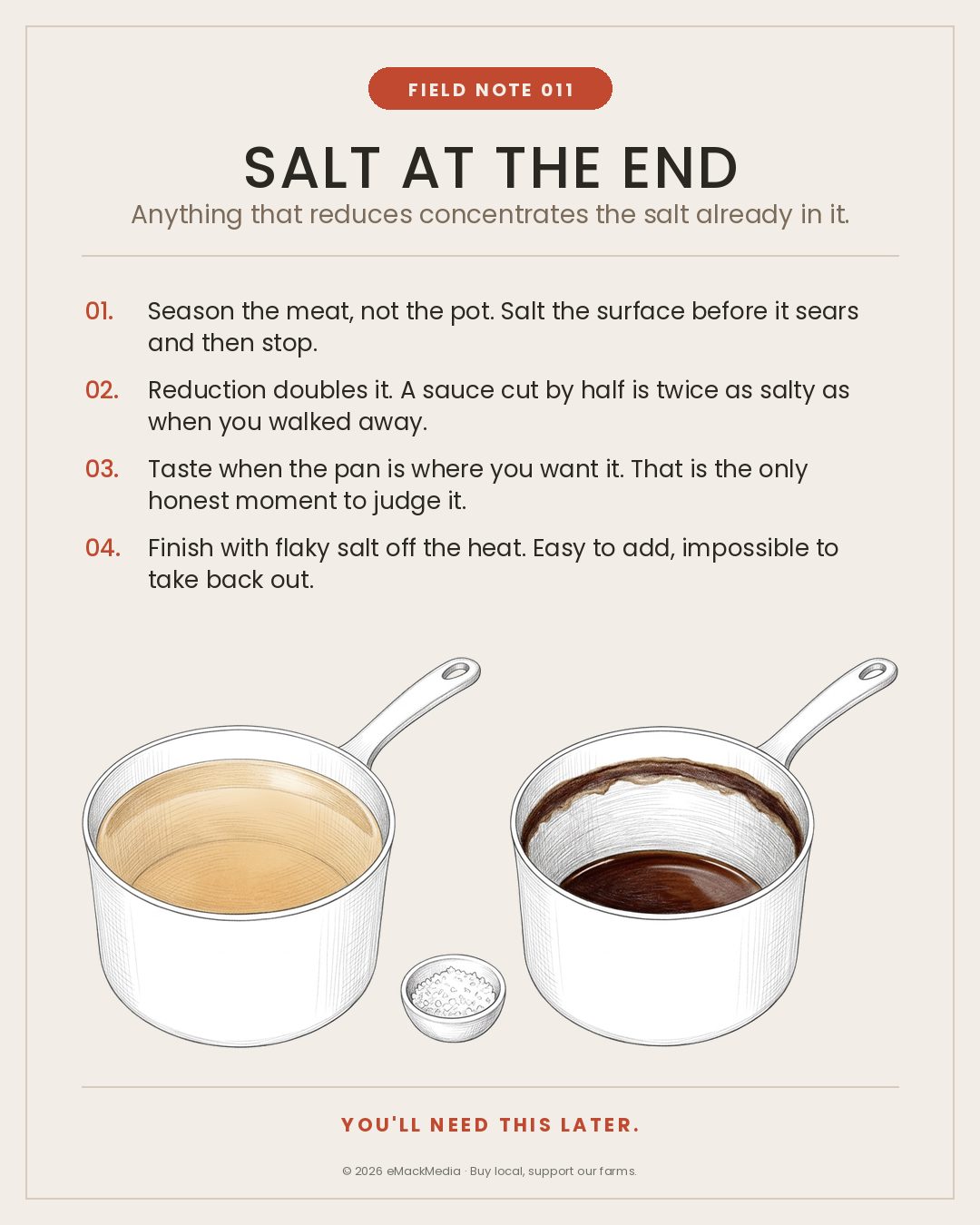
Field Note 011, Salt at the end.

Field Note 011

Salt at the end.

Everything that reduces gets saltier as it does. Season the pot at the start and you can walk back to a sauce you cannot fix.

  1. Season the meat, not the pot. Salt the surface before it sears, because that salt is doing a job there. Then stop.
  2. Reduction doubles it. Cut a liquid by half and you have doubled the salt in every spoonful. Cut it by three quarters and you have quadrupled it.
  3. Taste at the finish line. The only honest moment to judge seasoning is when the sauce is at the consistency you are about to serve. Anything earlier is a guess about the future.
  4. Finish with flaky salt off the heat. Easy to add, impossible to take back out. If you have gone too far, more liquid or an unsalted starch is the only rescue, and neither one is good.

You'll need this later.

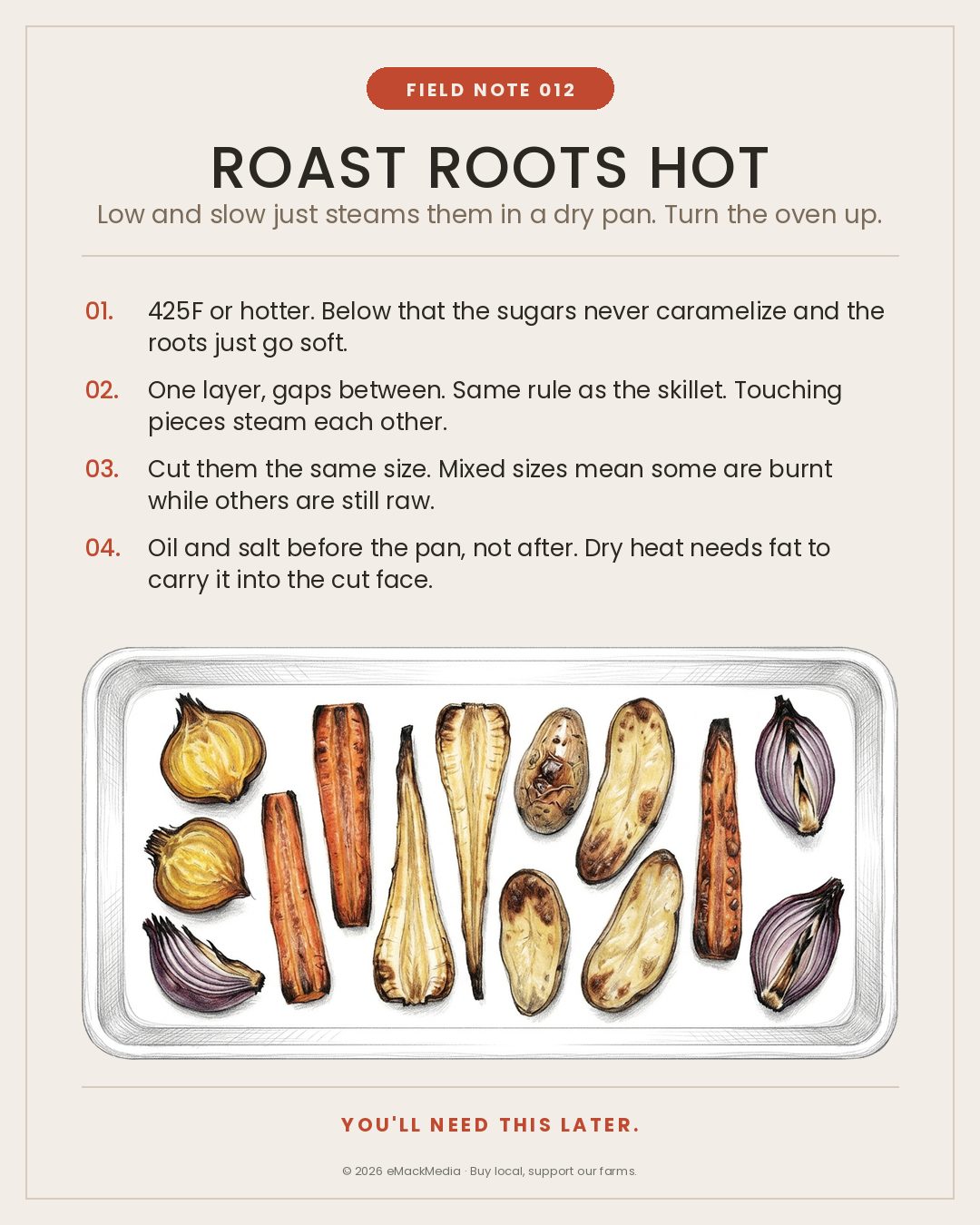
Field Note 012, Roast roots hot.

Field Note 012

Roast roots hot.

If your roasted vegetables come out soft and pale, the oven was too cool and the pan was too full.

  1. 425F or hotter. Caramelization needs real heat. Below about 400 the sugars never get going and the vegetable just softens in its own moisture.
  2. One layer, gaps between every piece. Same rule as the skillet. Touching pieces trap steam against each other, and steam is the enemy of a browned edge.
  3. Cut them the same size. A tray of mixed sizes means the small pieces are carbon by the time the big ones are cooked. Uniform is not fussiness, it is the whole job.
  4. Oil and salt before the pan, not after. Dry heat needs fat to carry it into the cut face. Oil added afterwards is just oil on a vegetable.

You'll need this later.

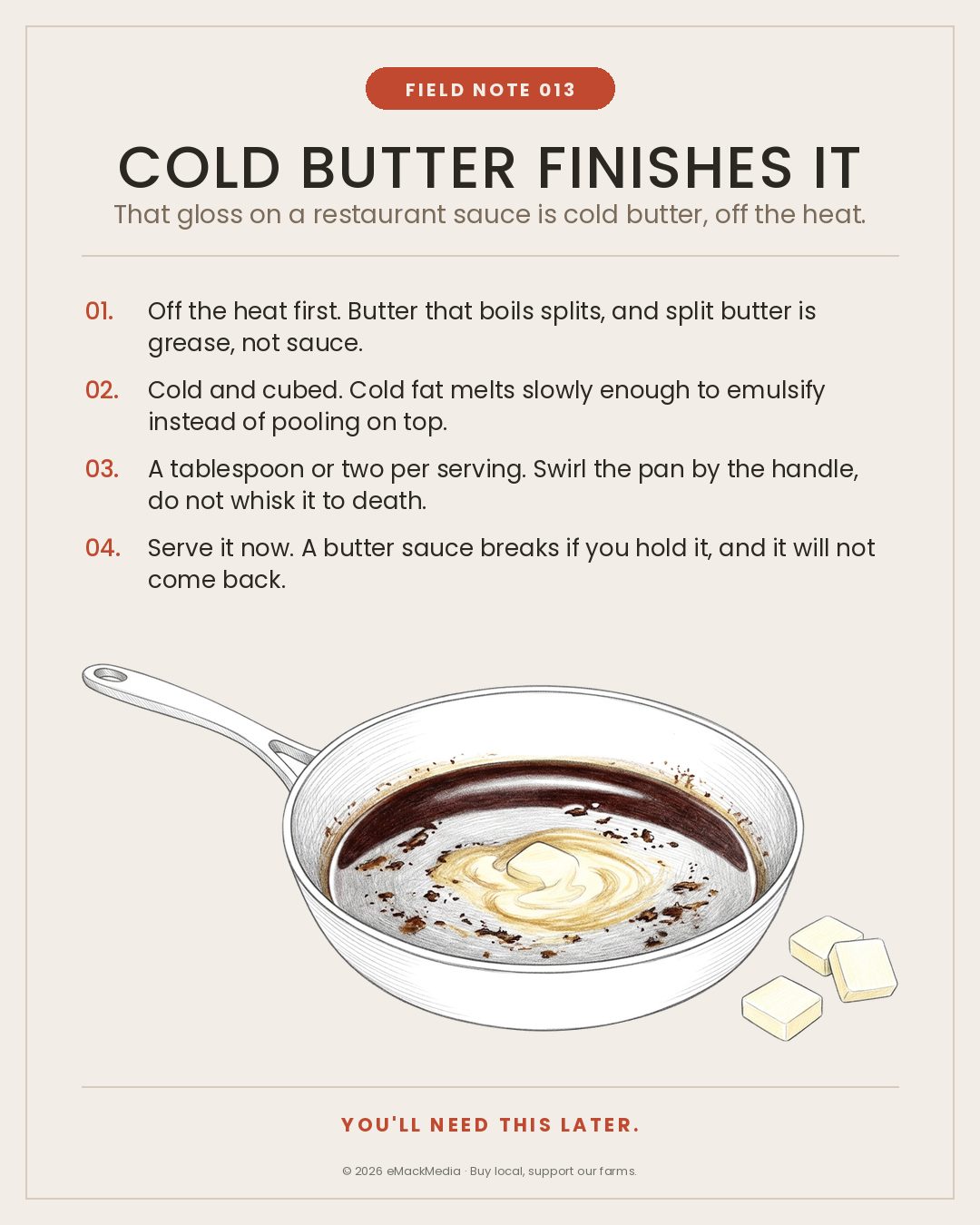
Field Note 013, Cold butter finishes it.

Field Note 013

Cold butter finishes it.

The gloss on a restaurant pan sauce is not a reduction trick. It is butter, cold, swirled in off the heat.

  1. Off the heat first. Butter is an emulsion of fat and water. Boil it and it breaks, and broken butter is grease floating on your sauce.
  2. Cold and cubed. Cold fat melts slowly, and slow is what lets it emulsify into the sauce instead of pooling on top of it.
  3. A tablespoon or two per serving. Swirl the pan by the handle rather than whisking. You are coaxing it together, not beating it.
  4. Serve it now. A mounted butter sauce breaks if you hold it or reheat it, and it does not come back. Make it last, plate it first.

You'll need this later.

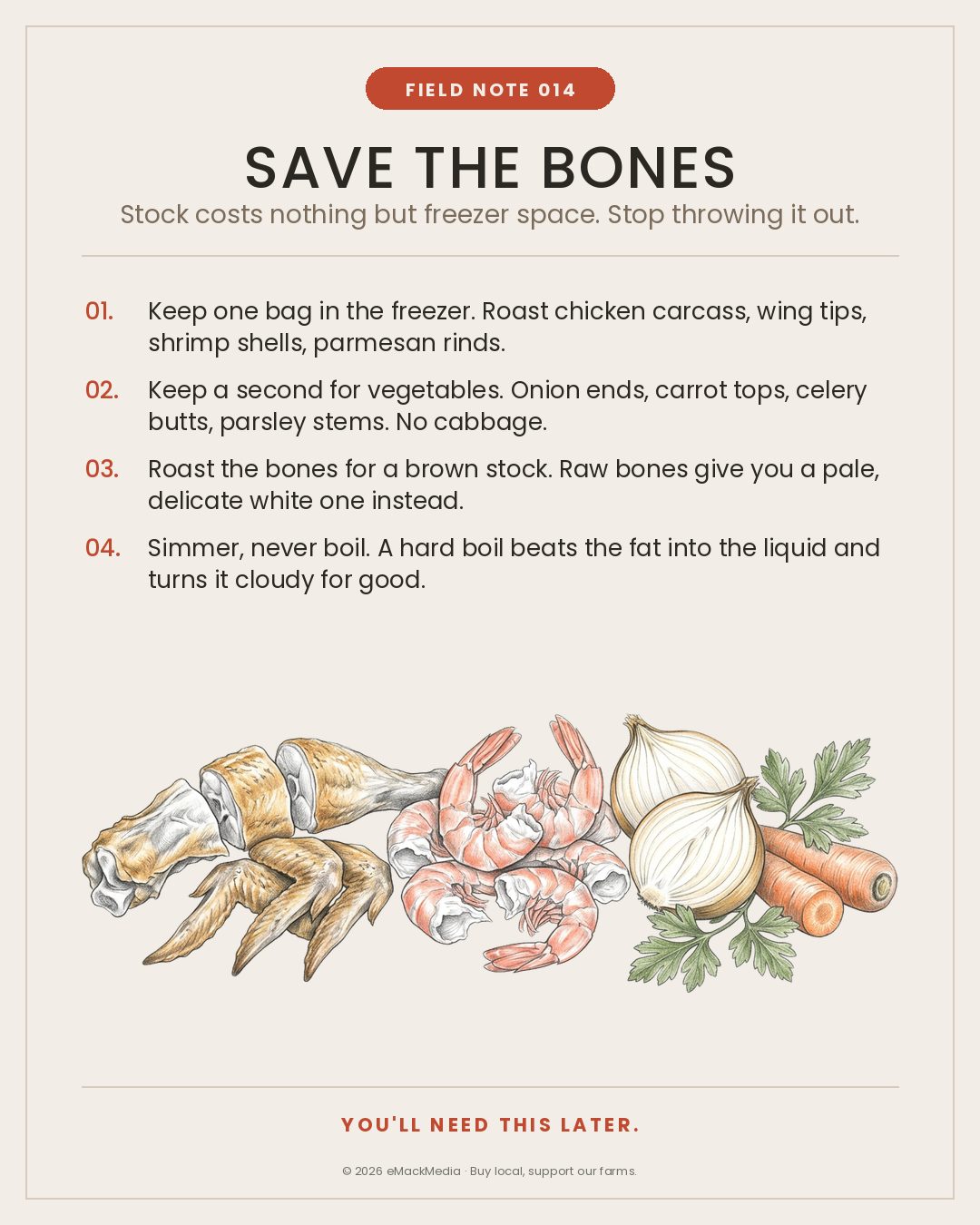
Field Note 014, Save the bones.

Field Note 014

Save the bones.

The best thing in your kitchen is the part you keep throwing away. Stock costs nothing but freezer space.

  1. Keep one bag in the freezer for animal scraps. Roast chicken carcasses, wing tips, shrimp shells, the rind off a wedge of parmesan. It all goes in the same bag until the bag is full.
  2. Keep a second bag for vegetables. Onion ends, carrot tops, celery butts, parsley stems, mushroom trim. Leave out cabbage, broccoli and the rest of that family. They turn a stock sulfurous.
  3. Roast the bones for a brown stock. Raw bones give a pale, clean, delicate stock for light soups. Roasted bones give a deep brown one. Both are right, they are different tools.
  4. Simmer, never boil. A hard boil beats the fat into the liquid and the stock goes cloudy and stays that way. Bare bubbles, skim the top, and strain it without pressing.

You'll need this later.

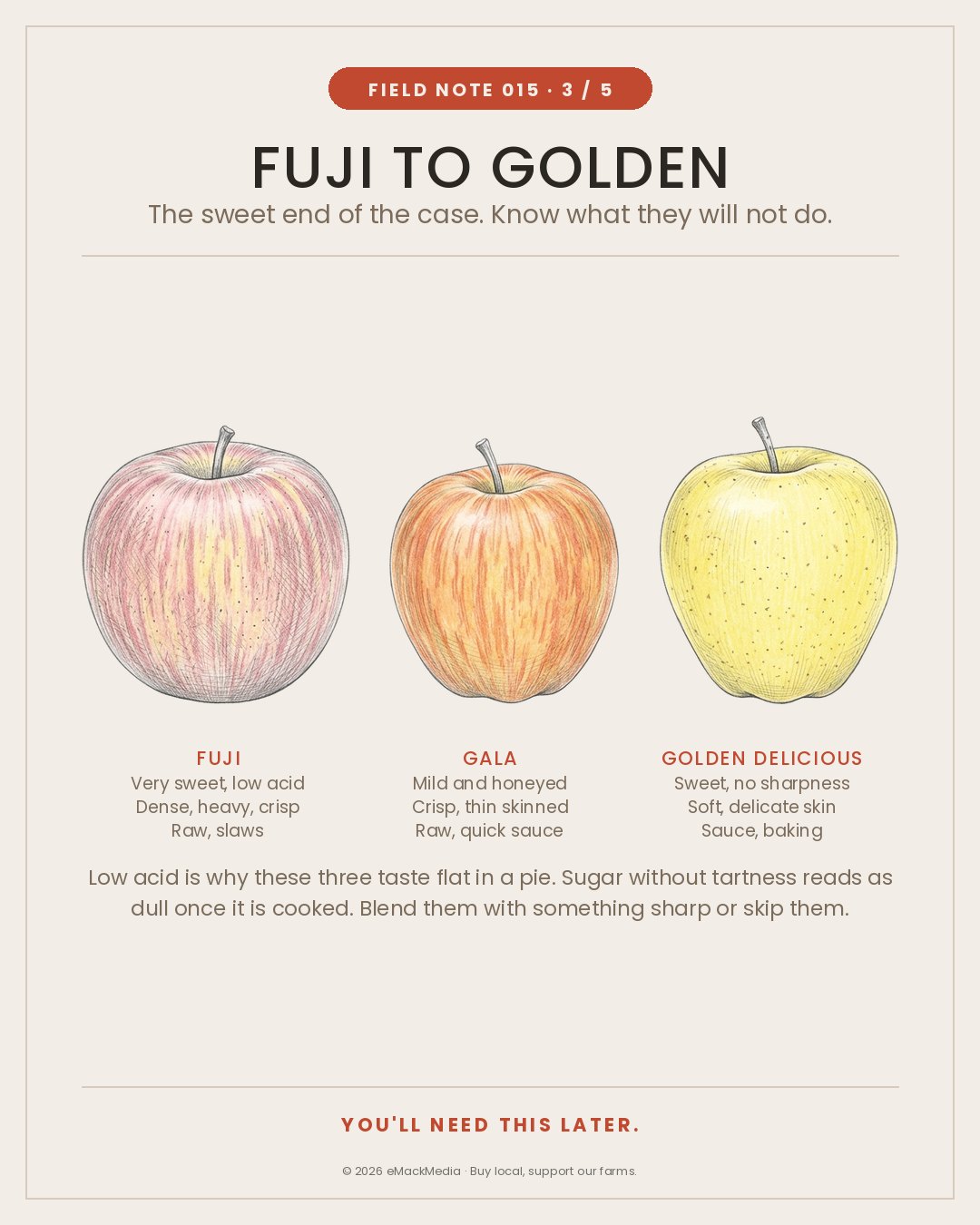
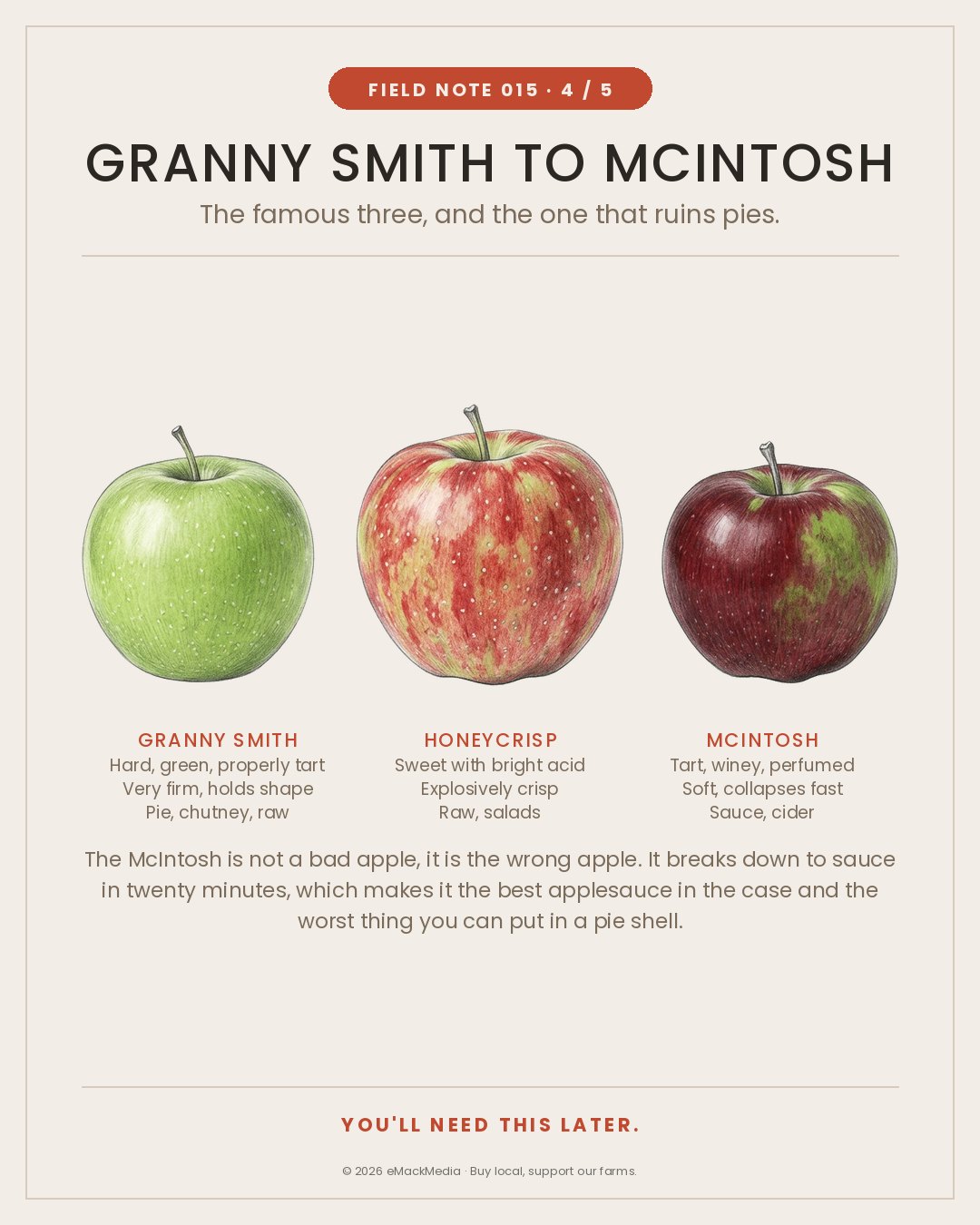
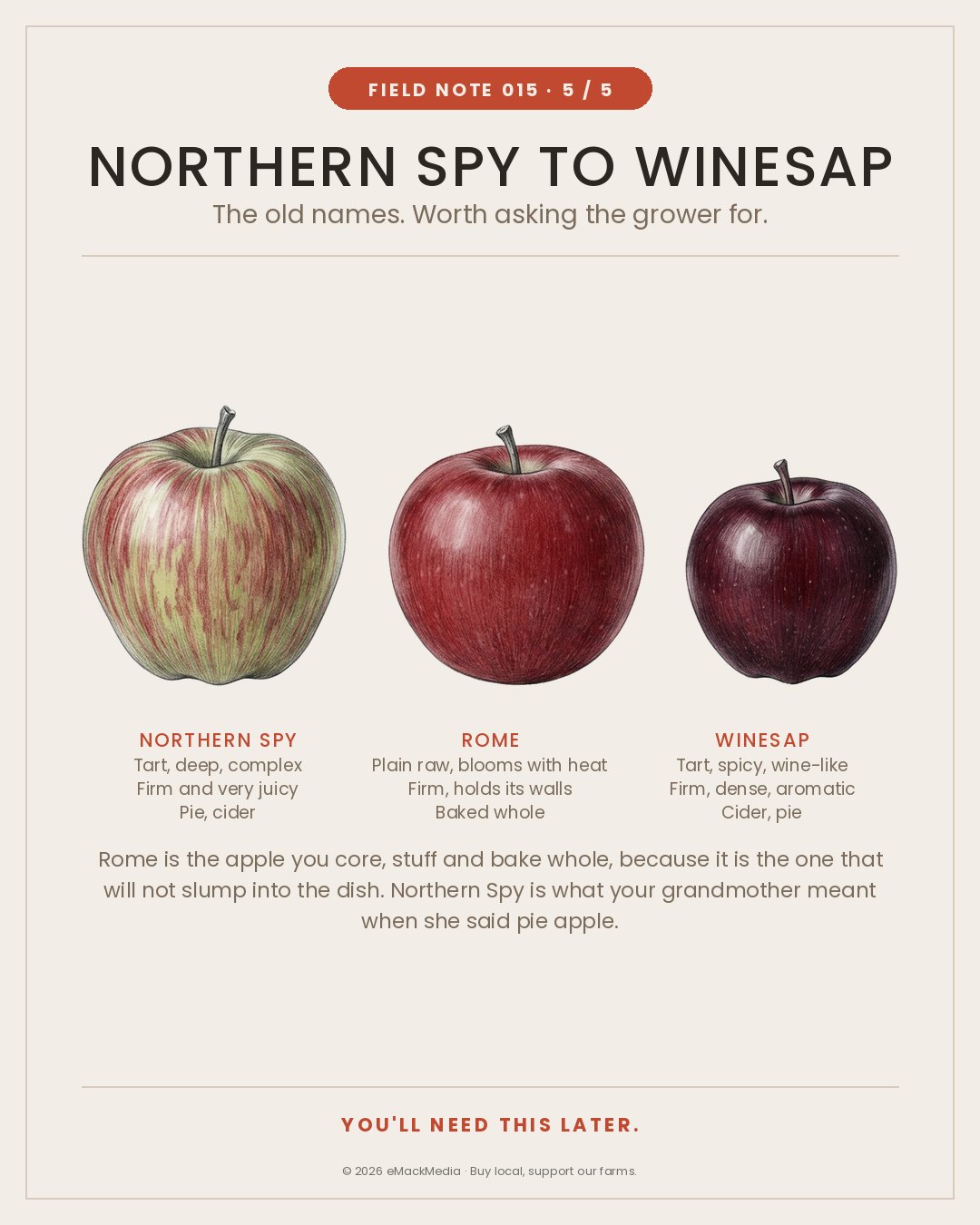
Field Note 015, Know your apples., slide 1Field Note 015, Know your apples., slide 2Field Note 015, Know your apples., slide 3Field Note 015, Know your apples., slide 4Field Note 015, Know your apples., slide 5

Field Note 015

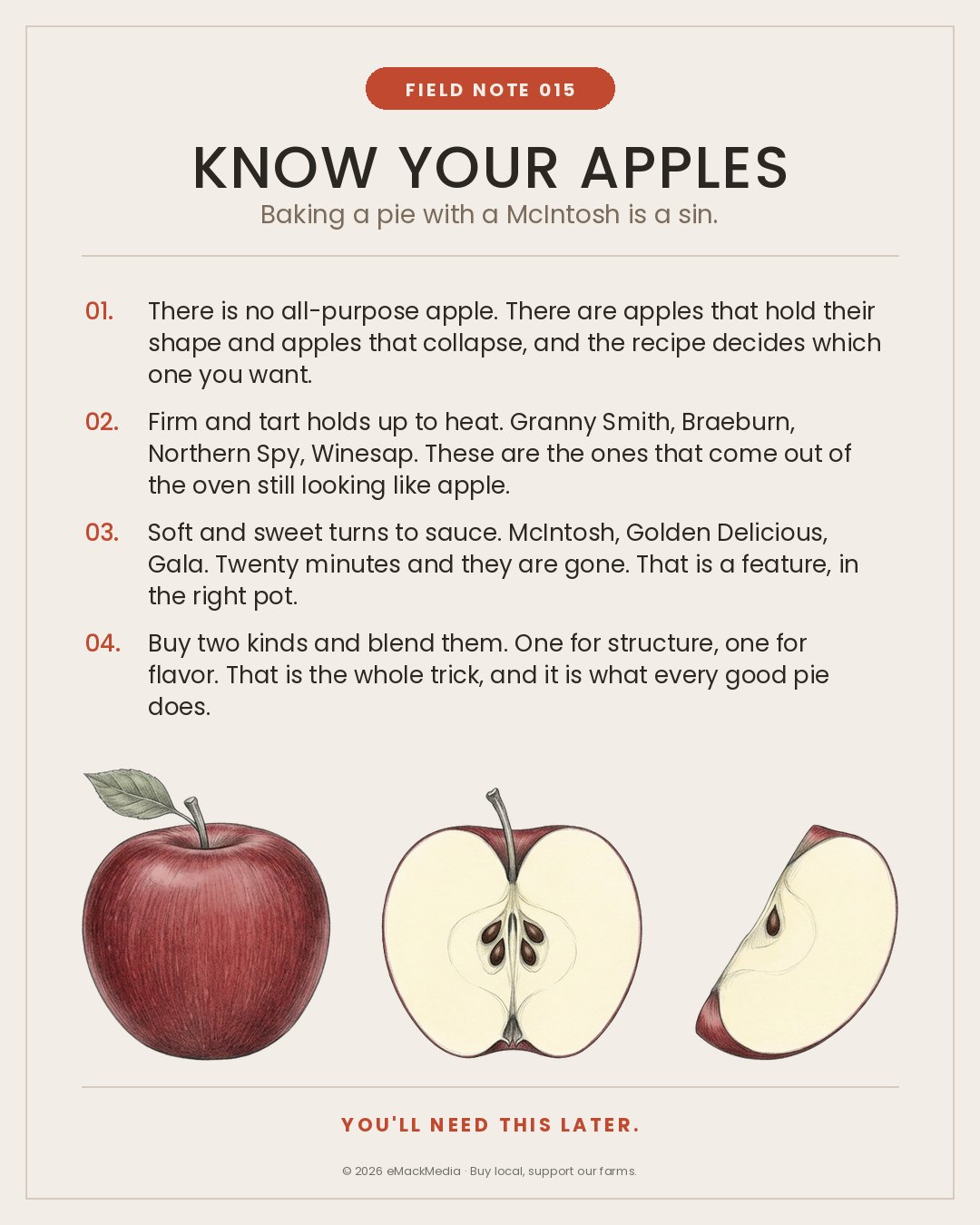
Know your apples.

Baking a pie with a McIntosh is a sin.

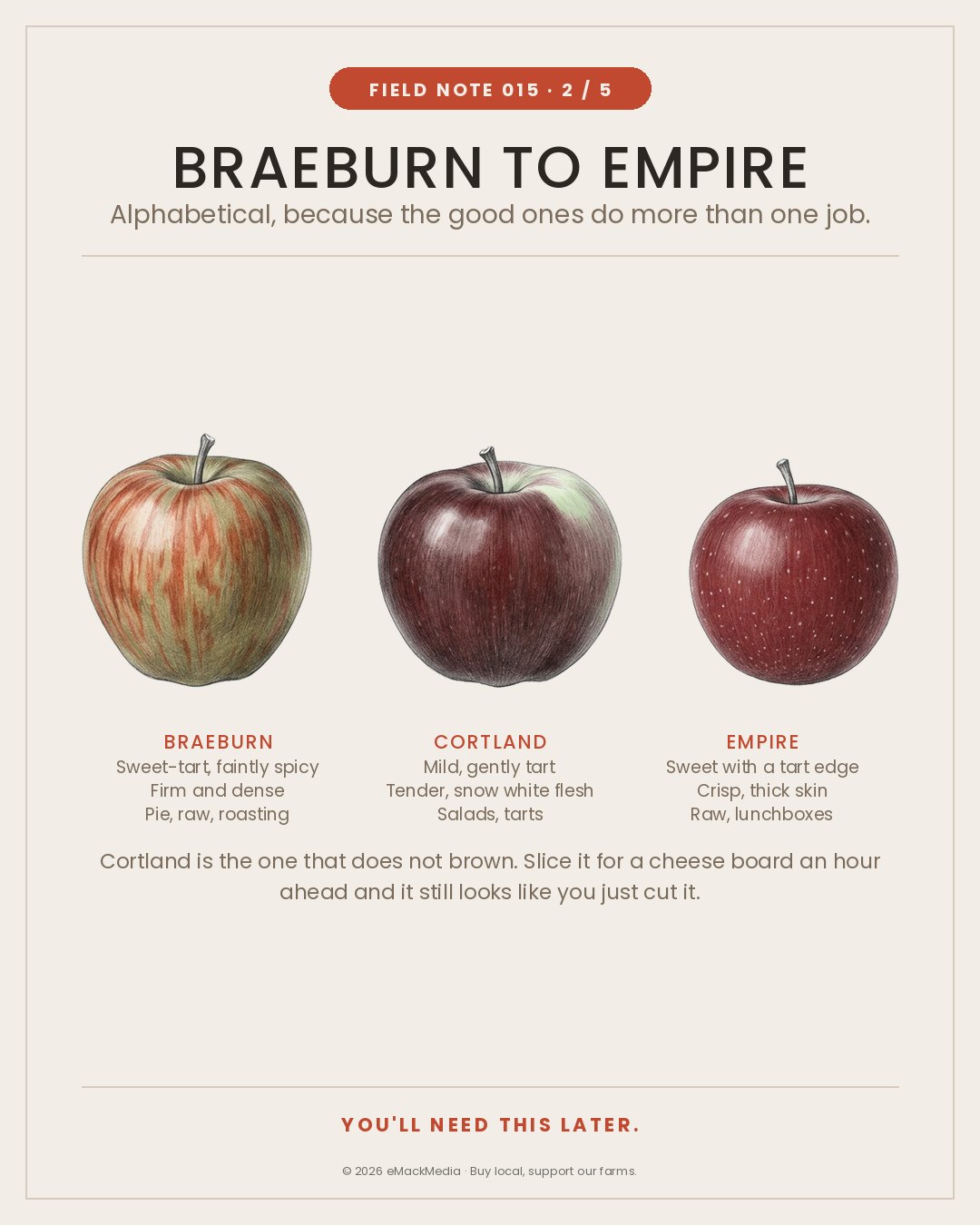
  1. Twelve apples, alphabetical, three to a card. No grouping by use, because the crossover is real and people eat Granny Smiths straight.
  2. Each one gets the same three lines: taste, texture, and what it is actually good for.
  3. The short version. Firm and tart holds its shape in a pie. Soft and sweet collapses into sauce.
  4. McIntosh collapses. That is the sin.

Swipe for all twelve: Braeburn, Cortland, Empire, Fuji, Gala, Golden Delicious, Granny Smith, Honeycrisp, McIntosh, Northern Spy, Rome, Winesap.

Save this one for October.